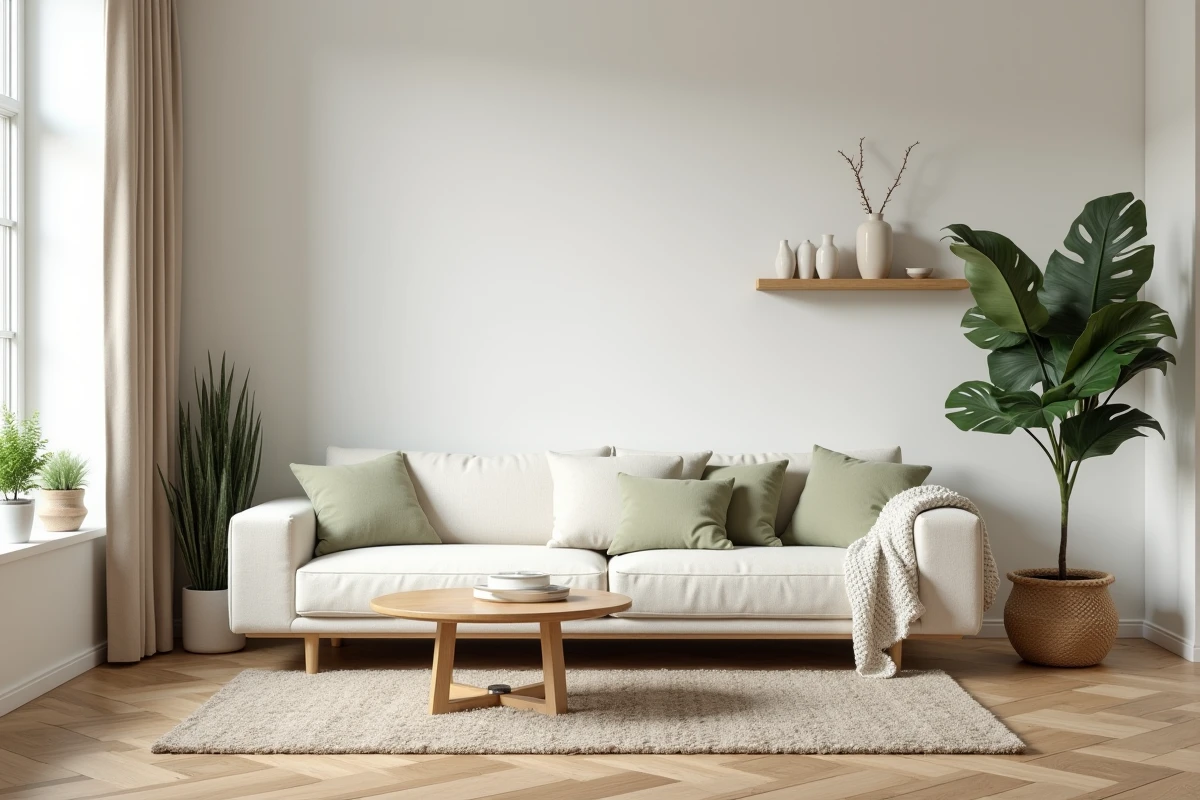
Changing the atmosphere of a room doesn’t always require major renovations. Sometimes, simply replacing a light fixture, repositioning a piece of furniture, or introducing a new color palette is enough for the space to tell a different story. The decorating trends emerging this year share a common thread: they prioritize the sustainability of materials, sensory comfort, and a more personal approach to interior design.
Circular decoration and refurbished furniture: the game-changing reflex
Have you noticed that online flea markets and second-hand corners are multiplying in decorating stores? It’s no coincidence. Leroy Merlin, in its 2024 Habitat Barometer, confirms that reuse and second-hand items are becoming a major criterion in interior decoration projects in France.
The principle is simple. Instead of buying a new piece of furniture, one opts to refurbish, repair, or recondition an existing item. This reflex, known as circular decoration, responds to two concrete motivations: limiting environmental impact and managing one’s budget in an inflationary context.
To spot items suitable for reconditioning, focus on solid structures made of solid wood or metal. A 70s oak sideboard, once sanded and covered with a matte terracotta paint, can become the centerpiece of a living room. In contrast, a particle board piece rarely supports a second life cycle.
Exploring the decoration universes of Murmures Déco allows you to find inspirations that blend antique pieces and contemporary objects in coherent atmospheres.
Acoustic and visual comfort: designing an interior suitable for remote work
Competitors talk a lot about colors and shapes. Few address a central topic this year: the sensory comfort related to working from home. A study by Euromonitor International published in January 2025 highlights a continuous increase in purchases of decoration related to remote work, with strong demand for products that enhance acoustics and visual comfort.
Specifically, this concerns three categories of decorative objects that play a functional role:
- Textile wall panels, often made of recycled felt, that absorb sound reflections in an open space and add a graphic touch to the wall
- Thick acoustic curtains, available in neutral shades or discreet patterns, that reduce sound reverberation while filtering light
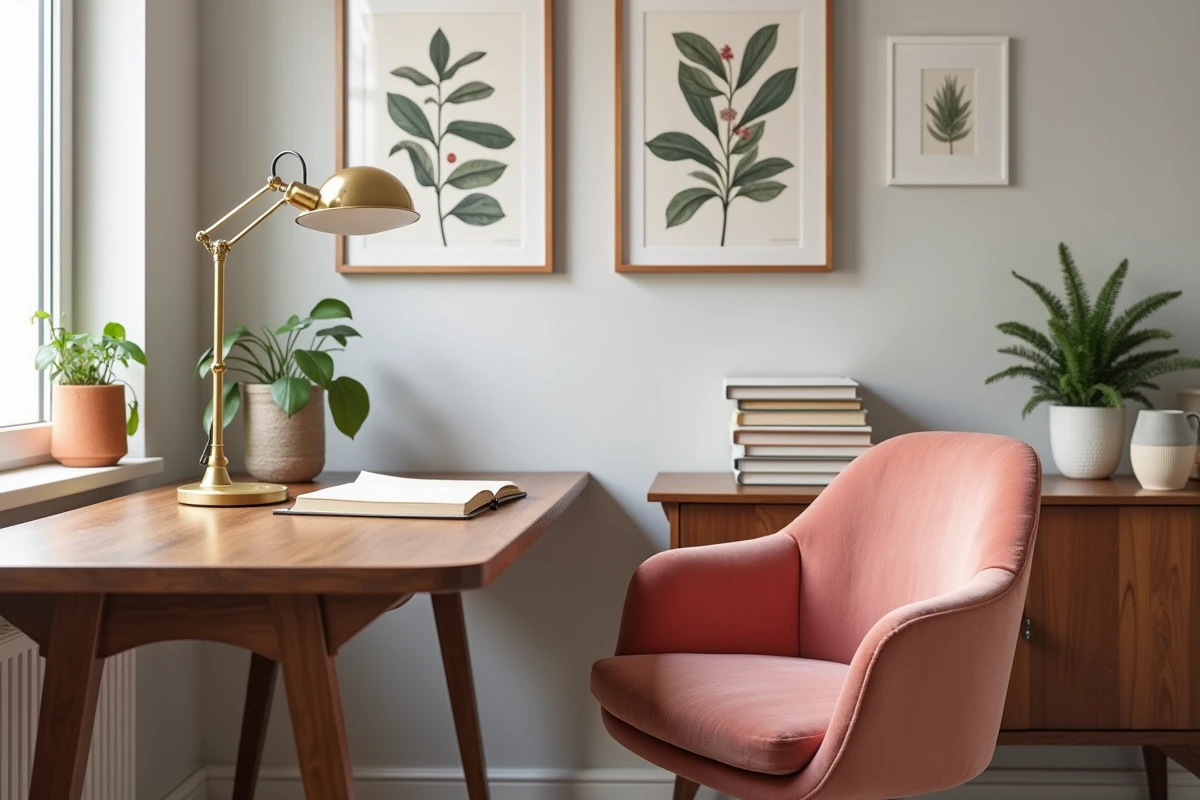
- Desk lamps with adjustable color temperature, transitioning from cool light (focus) to warm light (relaxation) depending on the time of day
Why choose these rather than a simple screen or noise-canceling headphones? Because these elements permanently decorate the room, even when not working. A terracotta or midnight blue felt wall panel remains a decorative object in its own right, unlike a tech accessory that gets stored in a drawer.
Natural materials and earthy colors: the trendy palette in interior decoration
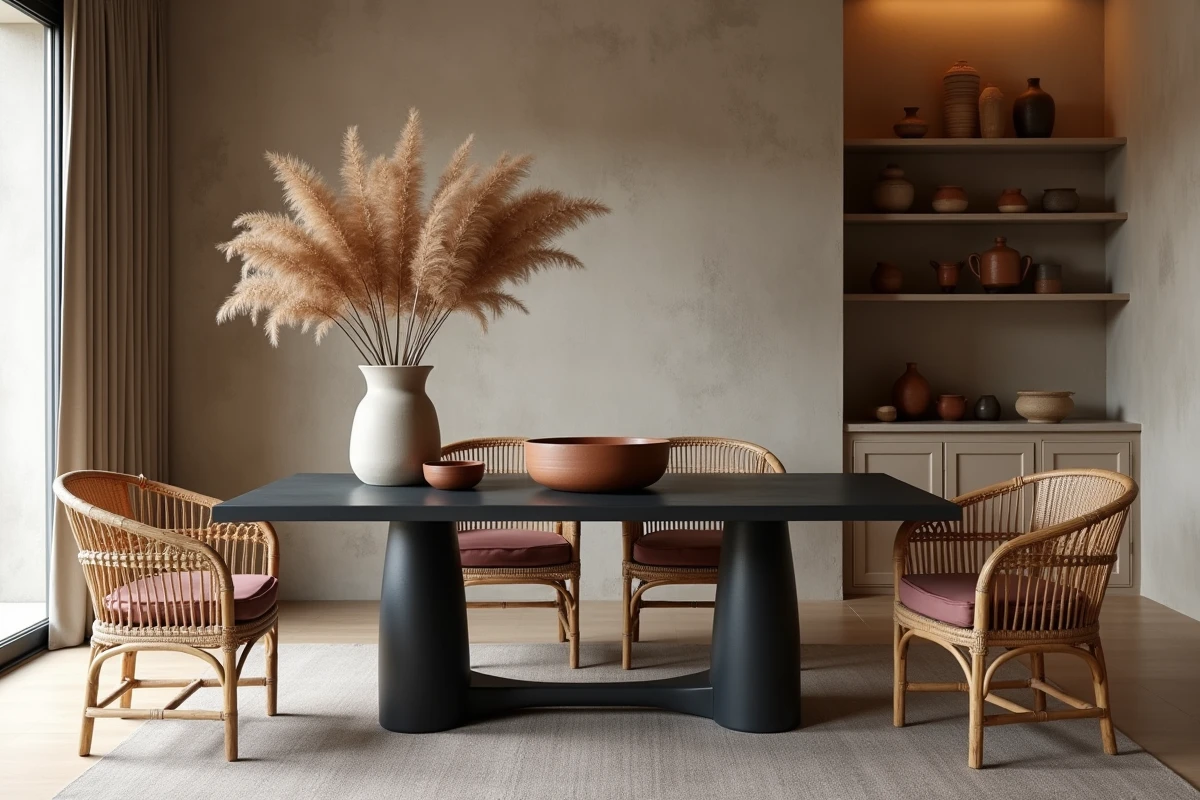
Terracotta, raw linen, light wood, and reconstituted stone dominate the new collections. This is not a passing trend. It is part of a broader movement where characterful materials replace plastic finishes.
The idea is not to turn your home into a mountain chalet. It’s about choosing natural accents that ground the atmosphere. For example, an oiled oak table top, a glazed stoneware vase on a black metal shelf, or washed linen cushions on a contemporary sofa.
The color palette accompanying these materials remains understated: sandy beige, sage green, clay brown, off-white. The contrast comes from textures rather than hues. A smooth white wall next to a wall covered with fine slatted wood panels creates visual depth without resorting to a bright color.
Combining textures without overloading
The most reliable rule: a maximum of three materials per room to maintain a clear reading. Beyond that, the eye doesn’t know where to settle. In a living room, this could mean: wood (coffee table), metal (light fixture), textile (sofa and rug). Each material occupies a different visual register, which is enough to create rhythm.
Detachable furniture and durability index: what regulations change for decor
Since decree n°2024-148 of February 29, 2024, related to the Anti-Waste for a Circular Economy (AGEC) law, manufacturers of light fixtures and small furniture must direct their collections towards pieces that are easier to disassemble and repair. The reparability index is gradually expanding to a durability index that takes into account robustness and the availability of spare parts.
For you, this translates into a concrete choice criterion when buying. Favor screw assemblies over glued ones, standardized parts (sofa legs, lampshades, handles), and brands that clearly display the duration of availability of replacement components.
This is not just an ecological gesture. A piece of furniture that allows you to replace a broken leg or a damaged drawer lasts longer and costs less over time than a disposable piece replaced every three years. Durability is becoming a full-fledged design criterion.
Points to check before buying decorative furniture
- The type of assembly: visible screws or reversible clip system, indicating that the furniture disassembles without damage
- The availability of spare parts announced by the manufacturer, ideally over several years
- The nature of the main material: certified solid wood, recycled metal, or identified composite materials
- The display of the reparability index (mandatory for certain categories), which gives a score out of ten
Enhancing an interior this year means making choices that stand the test of time. The most solid decor trends are not limited to a seasonal color or pattern. They touch on how an object is made, how a room sounds when you work in it, and the pleasure of keeping a piece of furniture long enough for it to tell a story.