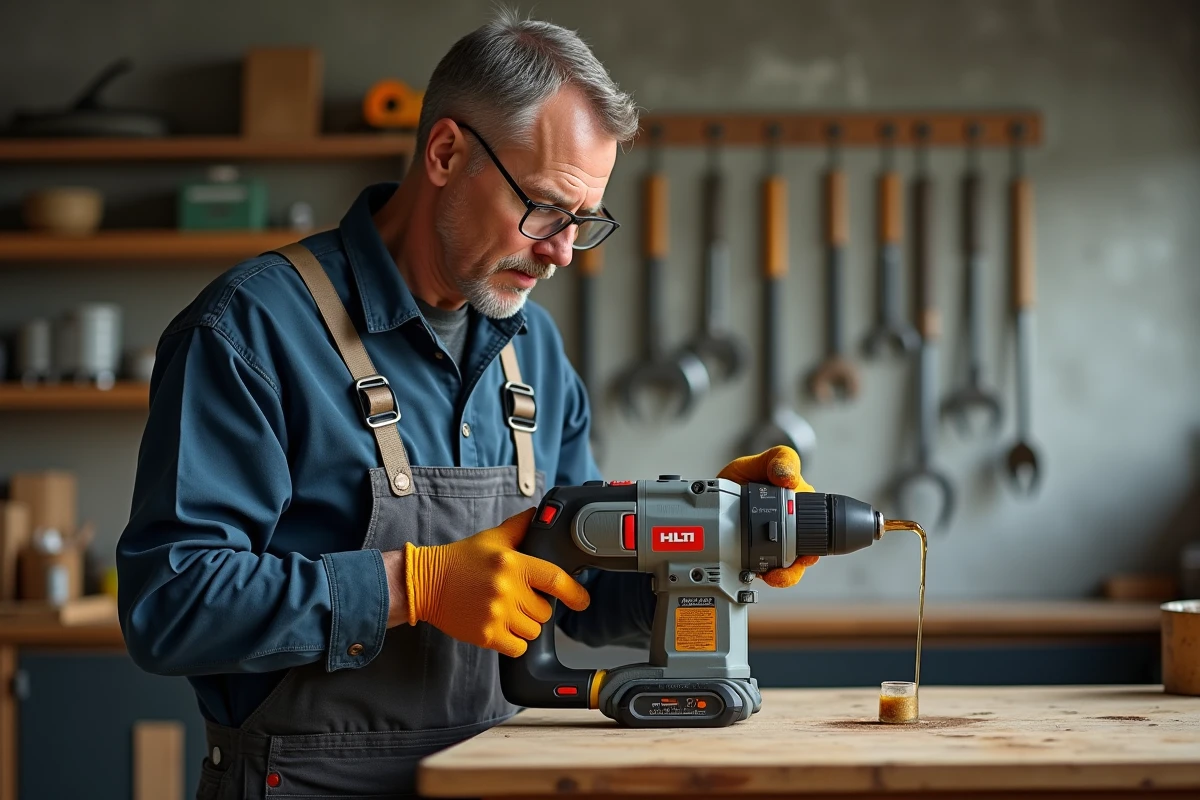
Putting generic oil in a Hilti hammer drill is like playing the lottery with the reliability of your tool. Hilti, the Swiss manufacturer known for its robust machines, leaves no room for improvisation: its recommendations are strict, and for good reason. Using an unapproved lubricant risks prematurely damaging seals and gears, or even voiding the warranty. Yet, some on job sites continue to bet on regular engine oil, hoping to save a few euros. Bad calculation: the consequences never take long to appear.
The gap between technical oils and basic lubricants goes beyond the label. Viscosity, heat resistance, chemical additives: each characteristic affects longevity and performance. Even within the Hilti range, there is no one-size-fits-all answer: the model of the device, its use, and the encountered constraints all matter. Relying on the manufacturer’s specifications is betting on the lifespan of your machine and the consistency of its operations.
Why oil plays a key role in the performance of your Hilti hammer drill
Lubrication is the primary factor in the reliability of a Hilti hammer drill. It protects each part subjected to mechanical stress and high temperatures. Without a well-chosen oil, wear sets in, corrosion threatens, and the tool quickly loses efficiency. Experienced craftsmen know this: a technical oil reduces friction in the gears, dampens noise, limits vibrations, and ensures work without unpleasant surprises, even during repetitive or demanding tasks.
To guarantee this protection, oils dedicated to Hilti hammer drills contain specific additives. Here’s their role:
- Anti-wear additives create a thin protective layer on the metal, limiting deterioration.
- Anti-corrosion additives drive away moisture and protect against rust.
- Extreme pressure additives absorb shocks and intense stresses.
This technical composition aims to preserve the mechanics and maintain the striking force intact, even after hours of use.
Another criterion that should never be overlooked is thermal stability. A quality oil does not degrade under heat and ensures the cleanliness of the mechanisms, without deposits or performance loss. In short, choosing the right lubricant ensures both the safety of the tool and that of the user. Which oil for Hilti hammer drill to adopt? Behind this question lies the reliability of your equipment.
For those who want to delve deeper into the subject, the page “Choosing the Best Oil for Your Hilti Hammer Drill: Tips and Tricks – Home Dome” details effective formulas and reflexes to adopt on the field.
What criteria to prioritize when choosing your oil
Choosing a suitable oil for your Hilti hammer drill is not just a maintenance habit, but a real technical choice. At the top of the criteria is viscosity: it regulates the circulation of the lubricant and influences the tool’s ability to keep pace. If too fluid, the oil poorly protects against wear. If too thick, it slows down the gears and reduces power. The nuance is subtle but decisive.
Professionals often prefer synthentic oil, a guarantee of thermal stability and wear resistance, especially for intensive use. This choice is essential for those who want to maintain consistent performance over time. For occasional jobs or less frequently used tools, a mineral oil ISO VG 68 or ISO VG 100 may suffice, provided compatibility with the model in use is respected.
Complying with the manufacturer’s recommendations is not just an administrative formality. It is the only way to ensure optimal lubrication and not compromise the warranty. Before any intervention, the user manual is an essential reference.
Usage conditions also play a role: extreme temperatures, high cadence, or occasional interventions require specific formulations. Anti-wear, anti-corrosion, and extreme pressure additives enhance protection and contribute to the tool’s long-term preservation.

Practical tips for hassle-free use and maintenance
Working with a Hilti hammer drill means accepting a daily discipline. The first reflex: check the oil level before each use. This simple check prevents breakdowns and limits the risk of accelerated wear. A regular oil change, according to the manufacturer’s guidelines, is essential: worn oil loses all protective capacity, exposing the mechanics to corrosion or overheating.
Maintenance is not limited to lubrication. A thorough cleaning after each use is recommended: dusting off air intakes, removing residues from the casing, inspecting for leaks or signs of emulsion in the oil. These quick inspections allow for detecting a problem before it worsens.
For tools subjected to intensive use in chiseling, a lithium grease (like universal grease C400G) applied to the gears provides better resistance to wear and heat. Always follow the manufacturer’s instructions when greasing: a wrong move can jeopardize the validity of the warranty.
Finally, storage is as important as maintenance. The tool should remain in a dry space at moderate temperature. Neglecting storage accelerates the degradation of the lubricant and weakens the internal mechanics. This attention to detail on a daily basis is the key to keeping a Hilti hammer drill effective and reliable, job after job.
Caring for your Hilti hammer drill is an investment in consistency and power over time. And, on a job site, nothing surpasses the confidence of a tool that never lets you down at the wrong moment.